



How Often Should Jewelry Be Cleaned and Inspected? A Jeweler's Maintenance Schedule

The short version: Have frequently worn fine jewelry professionally inspected about every six months and clean it at home only as often as the material safely allows. Daily-wear rings need the most attention; occasional pieces can be checked yearly. Clean immediately after lotions, saltwater, chlorine, impact, or visible buildup, and stop wearing anything with a loose stone or damaged setting.
Jewelry maintenance has two separate jobs. Cleaning removes oils and buildup so a piece looks bright. Inspection checks the prongs, clasps, settings, stringing, and metal for problems that could cause loss. A ring can look clean and still have a dangerous loose prong, which is why the inspection schedule matters more.
What maintenance schedule do jewelers recommend?
GIA advises that jewelry be checked every six months and cleaned frequently. Jewelers Mutual similarly recommends professional cleaning and inspection twice a year. That is a good baseline for engagement rings, wedding bands with stones, tennis bracelets, and other pieces worn most days.
| Piece or situation | At-home care | Professional check |
|---|---|---|
| Daily-wear diamond ring | Gentle clean every 1–2 weeks, if the setting and materials allow | Every 6 months |
| Wedding band without stones | Wipe after wear; clean monthly | Yearly, or sooner if scratched or bent |
| Earrings and pendants | Wipe after wear; clean when oils dull the surface | Yearly for occasional wear; 6–12 months for frequent wear |
| Pearls, opals, turquoise, or delicate gems | Soft damp cloth; avoid soaking unless a jeweler approves | Yearly and whenever stringing or settings change |
| After impact or snagging | Stop wearing it | Immediately |
How can you tell jewelry needs an inspection now?
- A stone clicks, spins, or catches on fabric.
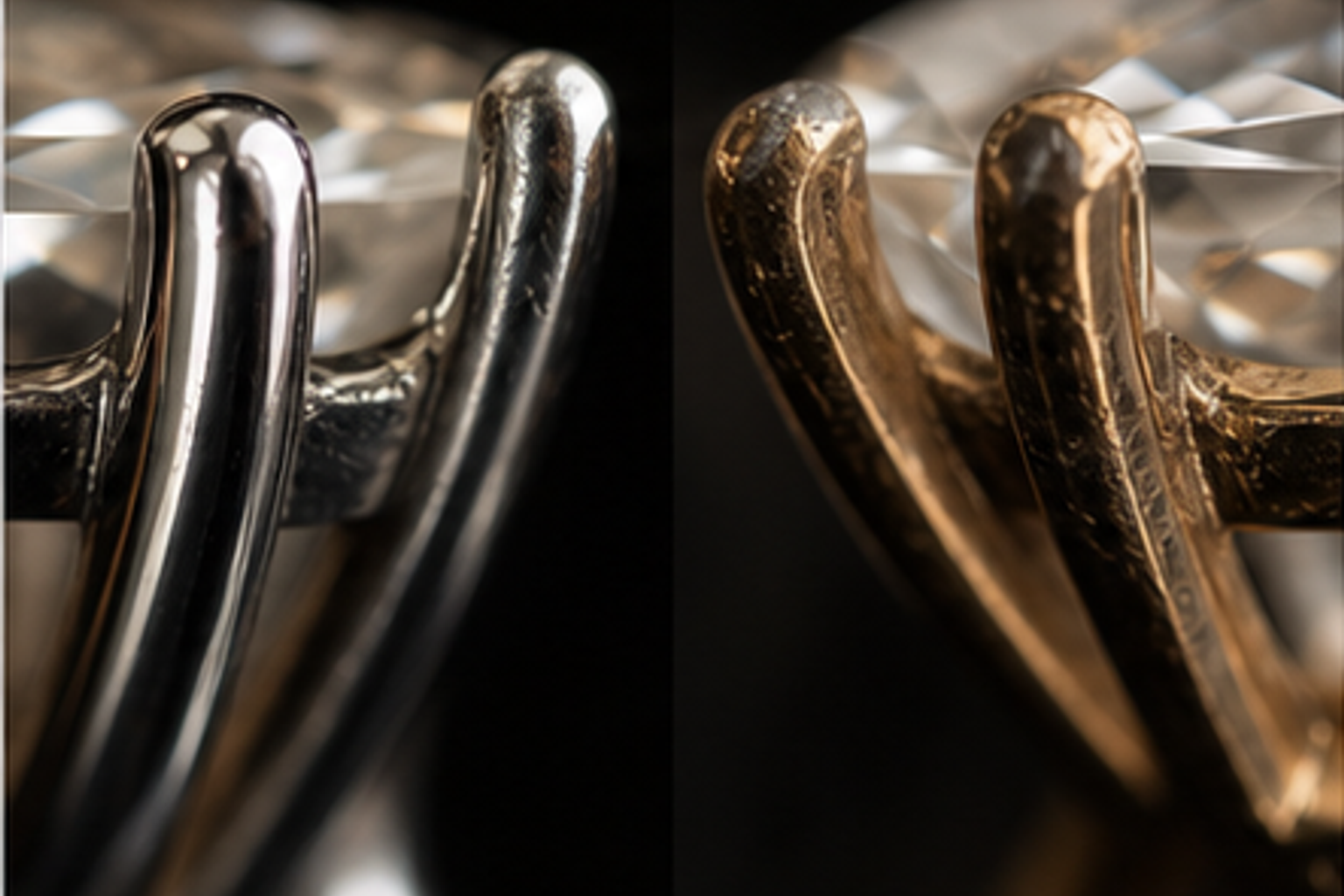
- A prong looks shorter, flatter, or different from the others.
- A clasp opens too easily or a safety catch no longer aligns.
- A chain has a stretched link, kink, or dark worn area.
- A ring is out of round, suddenly tight, or noticeably thin at the bottom.
- Pearl or bead stringing looks fuzzy, stretched, or discolored.
If you notice any of these, place the item in a small container and take it to a jeweler. Do not test a loose stone repeatedly with your fingernail; that can finish the job the damage started.
What is safe to clean at home?
For many sturdy gold or platinum pieces with diamonds, a short soak in warm water with a small amount of mild dish soap, followed by a very soft brush and thorough rinse, is enough. Close the drain, work over a bowl, and dry with a lint-free cloth.
Do not assume that method is safe for every gem. Pearls, opals, turquoise, emeralds with fracture filling, antique foiled stones, glued components, and some treated gems need different care. Ultrasonic and steam cleaners can also worsen loose settings or damage sensitive materials. When you do not know exactly what the piece contains, ask first.
What everyday habits extend jewelry life?
- Put jewelry on after lotion, perfume, sunscreen, and hairspray.
- Remove rings for heavy lifting, gardening, gym work, and household chemicals.
- Take fine jewelry off before swimming; chlorine can damage alloys and cold water makes rings easier to lose.
- Store pieces separately so diamonds do not scratch softer gems or metal.
- Keep a current appraisal and clear photos for important pieces.
Clean jewelry shines. Inspected jewelry stays yours.
What happens during a professional check?
A jeweler should inspect under magnification, check that stones are secure, test clasps and hinges, look for worn metal, and explain any recommended repair before polishing. Skibell's repair process finishes with a final polish and inspection after approved work is complete.
If it has been more than six months since your daily-wear pieces were checked, visit Skibell's Dallas jewelry repair service or schedule an appointment.
Sources
- GIA, Tips on Caring for Jewelry.
- Jewelers Mutual, Cleaning and Care guidance.
- Skibell Fine Jewelry, Jewelry Repair in Dallas.