



Platinum vs. White Gold vs. Yellow Gold: Which Ring Metal Lasts Longest?

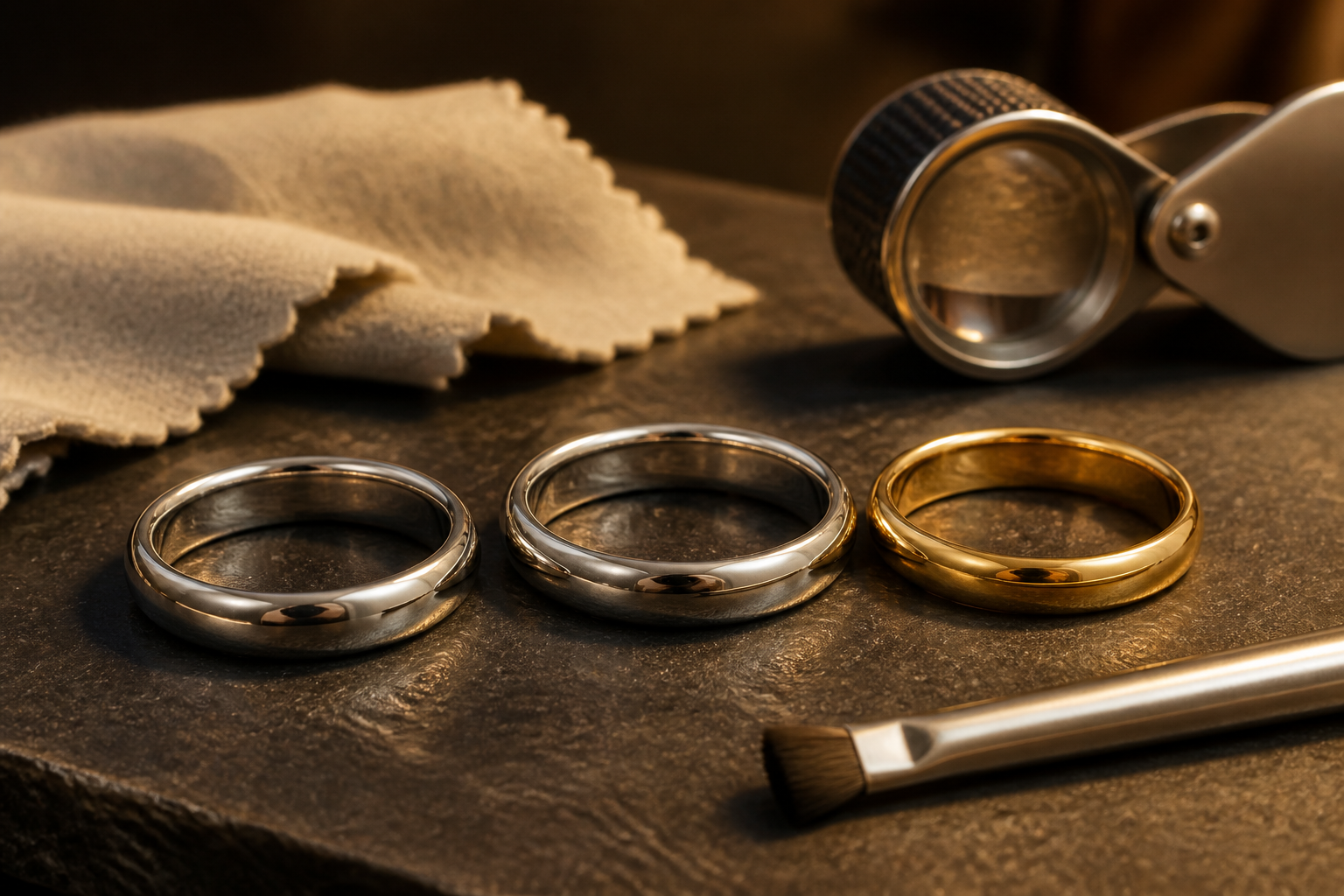
The short version: Platinum is usually the longest-wearing structural choice because it is dense, naturally white, corrosion resistant, and highly wear resistant. Yellow gold offers low color-maintenance and easy long-term service. White gold is durable but commonly needs rhodium replating to stay bright white. Any of the three can last generations with sound construction and regular inspection.
“Lasts longest” can mean several things. One person means resistance to metal loss. Another means fewer scratches, less color maintenance, easier resizing, lower allergy risk, or the ability to restore a ring decades later. Platinum, white gold, and yellow gold answer those questions differently.
Which ring metal is most durable for everyday wear?
For long-term structural wear, platinum is generally the strongest answer. GIA describes platinum as dense, wear resistant, corrosion resistant, and naturally white. It develops fine surface scratches and a soft patina, but it does not depend on a white surface plating.
Gold is softer in pure form, so engagement rings use alloys. Both 14K and 18K gold can be appropriate for daily wear. Fourteen-karat gold contains more alloying metal and is often chosen for toughness and value; 18K contains more pure gold and offers a richer color but can show wear differently. The exact alloy and construction still matter.
How do platinum, white gold, and yellow gold compare?
| Metal | Strengths | Long-term care |
|---|---|---|
| Platinum | Naturally white, dense, highly wear resistant, generally hypoallergenic | Develops patina; can be polished; needs prong and setting inspections |
| White gold | Bright white look, broad design selection, lighter feel than platinum | Rhodium finish may need replating; inspect prongs and any nickel sensitivity |
| Yellow gold | Natural warm color, no white plating, easy to match with many heirloom pieces | May scratch and need polishing; prongs and thin areas wear over time |
| 14K gold | Higher proportion of alloying metals than 18K, often practical for active wear | Alloy recipe affects color, hardness, and sensitivity |
| 18K gold | Richer gold content and color, traditional fine-jewelry choice | Can show dents or scratches sooner in some designs |
Does platinum scratch less than gold?
Not necessarily. Platinum can show scratches and develop a grayish patina. Its advantage is how it wears over time, not a permanently mirror-bright surface. Gold also scratches and can gradually lose material in high-contact areas. A polished showroom finish on any daily-wear ring will change. Decide whether you like natural patina or prefer periodic refinishing.
Why does white gold need replating?
White gold is yellow gold alloyed with white metals such as nickel or palladium, copper, and zinc. It is commonly coated with rhodium for a brighter white finish. That thin surface gradually wears, especially on the underside and edges, so the warmer underlying alloy may become visible. Replating restores the bright-white appearance but adds recurring maintenance that platinum and yellow gold do not normally require.
Which metal is best for sensitive skin?
Platinum is a common choice for metal-sensitive wearers because it is generally hypoallergenic. Some white-gold alloys contain nickel, a common allergen. Palladium-alloyed white gold or nickel-free yellow gold may be alternatives, but the jeweler should confirm the actual alloy. Do not rely on color alone to identify metal content.
Which metal makes a diamond look whitest?
Platinum and white gold provide a neutral white setting that can emphasize the colorless appearance of many diamonds. Yellow gold creates warmer contrast. Designers often use white prongs or a white head with a yellow-gold band so the diamond faces a neutral metal while the wearer still gets the warmer band color.
How often should a ring be inspected?
Have a daily-wear engagement ring professionally inspected about every six months, or sooner after a hard impact, snag, or change in sound or movement. The jeweler can check prongs, channels, stone security, shank thickness, finish, and fit. White gold can also be evaluated for rhodium replating at that appointment.
How should you choose the right ring metal?
- Choose platinum for a naturally white, dense, long-wearing ring and a substantial feel.
- Choose white gold for a bright white appearance, broad design availability, and a lighter feel, accepting future replating.
- Choose yellow gold for natural warm color and lower color-maintenance.
- Compare 14K and 18K based on color, alloy, weight, lifestyle, budget, and design.
- Ask how the prongs, head, shank, and wedding band will be built, because design is as important as metal.
The longest-lasting ring is the metal and construction suited to your life, followed by the inspections that catch small wear before it becomes a lost stone.
Where can you compare platinum and gold rings in Dallas?
Skibell Fine Jewelry can compare metal color, weight, maintenance, setting design, and wedding-band fit in person. Browse the bridal collection or schedule a private appointment at the Preston Road showroom.